Here is the video for the weekly newsletter. If you want to see the text and get a copy head over to EadsyAstronomy at this LINK. Shout out to Andrew Witt for being a StarGazer (contibuting member). Membership is free and you get alerted whenever I post. If you find value you can contribute at $3.00 a month to help offset some time and costs that go into creating the blog and website information. It is really appreciated.


2/26/2026
In the Heart of the Milky Way

In a massive leap for galactic archaeology, astronomers have released the largest ALMA image ever produced, providing an unprecedented look into the Central Molecular Zone (CMZ)—the chaotic, 650-light-year-wide heart of our galaxy. This new dataset, part of the ALMA CMZ Exploration Survey (ACES), doesn't just show us where the gas is; it reveals the "hidden chemistry" that fuels the birth of the galaxy's most massive stars.
For the text and to watch the ESO video on this amazing mosiac head over to EadsyAstronomy at this LINK. The video is worth heading over for!
Follow Up to Massive Satellites Launching into Low Earth Orbit: Goodbye dark skies
In today’s post, I want to highlight a deeply concerning development reported by Astrobites LINK regarding the future of our night skies. We’ve all been dealing with the increasing interference of Starlink, but two new proposals—one from Reflect Orbital and another from SpaceX—threaten to change the "forgotten sky" we love into a grid of artificial light and silicon.
Reflect Orbital: "Sunlight After Dark"
Imagine looking up and seeing artificial "stars" that outnumber the real ones by five to one. Reflect Orbital plans to launch a constellation of 50,000 mirrors by 2035 to sell "sunlight after dark."
"Once in orbit, this satellite will unfold a 18 m x 18 m sized mirror in a low earth orbit. When viewed from the ground, this mirror will be as bright as a full Moon when you are within the path of its reflection. And if not, it will appear as a star when passing overhead. This means that if Reflect Orbital reaches its goal of 50,000 mirrors, their mirrors will outnumber the real stars visible to the naked eye at night by more than a factor of 5."
Imagine 50,000 satellites beaming beams back to Earth each night! Even when you aren't in the direct beam, it will appear as a bright star passing overhead. For those of us who spend our nights sketching or imaging faint nebulae and hunting other deep sky objects, this isn't just a nuisance—it’s an environmental catastrophe for ground-based astronomy.
SpaceX: A Million Satellites for AI
As if 50,000 mirrors weren't enough, SpaceX has applied to the FCC to deploy 1 million satellites to create space-based AI data centers. To put that in perspective:
There are currently about 14,000 operational satellites.
This proposal would increase that number by a factor of 70.
The sheer volume of metal in orbit would create a permanent "haze" of reflected light, making true dark-sky observing nearly impossible and posing a massive risk for orbital collisions (Kessler Syndrome).
Imagine seeing this when you go to image or observe in your backyard. this is from Missouri on February 23rd, 2026 by amateur Don Bush (LINK). The second is from a darker site.


The Regulatory "Black Hole"
The most frustrating part? These companies are bypassing environmental protections. The FCC has traditionally used a "categorical exclusion" to skip the environmental impact studies required by the National Environmental Policy Act (NEPA).
Worse yet, new guidance from 2025 has seen the FCC argue that space-based operations should be exempt from NEPA entirely because they are "extraterritorial"—essentially arguing that because the satellites are in space, they don't affect the "environment" of the United States. We know better. The sky is a shared heritage, and the light pollution from these constellations knows no borders.
Remember YOU can submit comments at this link which I posted in a similar article earlier this week:
You can currently submit comments on this proposal.
Final Thoughts
For those of us who treasure the view from our backyards and the stillness of a dark-sky site, the clock is ticking. We are moving toward a future where "the stars" are just a commercial product. I’ll be keeping a close eye on the Earendil-1 launch in April—though I’d much rather be looking at the stars that have been there for billions of years.
Clear skies (while we still have them),
Jay
Original Article: Two satellite proposals threaten dark and quiet skies worldwide (Astrobites, Feb 26, 2026)
This is also available over at EadsyAstronomy LINK.
Astronomers of the Week: The Herschel Trio

So this week, I was going to focus on one of my personal hero's and favorite early astronomers, Sir William Herschel. However, I don't think you can review the life and contributions of Sir William without also addressing his sister, Caroline who assisted him and was an amazing astronomer in her own right. Finally, I had to look to Sir William's son, Sir John and his scientific contributions that built on the legacy of his father and aunt, and the one he created for himself.
Please note that there is SO MUCH more I could add, but I am just sticking to the very basics.
As always, the full text and info is over at EadsyAstronomy at this link.
Here is the video on Sir William Herschel
Here is the video on Caroline Herschel:
Here is Sir John Herschel, the son of Sir William.
2/24/2026
Beyond X-Class: A New Roadmap for the Sun’s Most Violent Eruptions

While space weather enthusiasts are familiar with "X-class" flares, this paper focuses on the "S-class" (Super-class)—flares that exceed X10 in intensity. These are the "black swan" events of the sun: rare, devastatingly powerful, and capable of crippling global power grids, destroying satellite electronics, and endangering astronauts.
Traditionally, solar forecasting has been event-based: scientists look at a specific sunspot and ask, "Will this explode today?" However, because superflares are so rapid and rare, this method often fails. The authors of this study propose a "paradigm shift" by moving from event-specific predictions to spatiotemporal "danger zones."
A Baby Picture of Our Sun: Why Star HD 61005 is teaching us about the Sun's Teenage Years

For decades, astronomers have known that our Sun sits inside a protective bubble called the heliosphere, created by the solar wind pushing against interstellar space. While we’ve seen these bubbles around massive, dying stars or super-fast pulsars, we have never been able to resolve one around a normal, "Main Sequence" G-type star (a yellow dwarf like our Sun)—until now.
Using the Chandra X-ray Observatory, the research team (led by C.M. Lisse) successfully imaged the astrosphere of HD 61005, a young star nicknamed "The Moth" due to its unusual, wing-shaped dust disk.
Full article and link to the paper over at EadsyAstronomy LINK.
WOH G64 A Massive Star heads into The Danger Zone

The Death Watch Begins: Is One of the Universe’s Largest Stars About to Explode?
Kenny Loggins in the song “Danger Zone” states in the lyrics:
Highway to the danger zone
Gonna take it right into the danger zone
Highway to the danger zone”
Well, today, we are going to head for a possible danger zone! For decades, WOH G64 has held a prestigious, if terrifying, title: one of the largest stars ever discovered. Located 160,000 light-years away in the Large Magellanic Cloud, this "Behemoth of the South" is so large that if placed in our solar system, its outer layers would reach past the orbit of Saturn.
However, two new reports from Sky & Telescope and Phys.org based on a newly published article in Nature, suggest that WOH G64 is no longer the star it used to be. It is currently undergoing a "metamorphosis" that astronomers believe is a final warning before a catastrophic supernova.
For the full video and story head over to EadsyAstronomy LINK
2/21/2026
The Breakthrough on Stellar Mixing: How Red Giants Leak their Chemicals and Elements out into the Interstellar Medium
For decades, we’ve had a "missing link" in our understanding of how stars age. We look at Red Giants and see a specific chemical signature—less carbon, more nitrogen—that shouldn't be there unless the star is "stirring" its insides. But our best physical models said that shouldn't be happening.
New supercomputer simulations just solved this by revealing the hidden role of rotation. Come learn more.
More info over at EadsyAstronomy at this LINK
2/20/2026
Hunting the Lion: Observing and Imaging Objects in Leo: Level 1 The Pride for Beginners or an Enjoyable Night Out
These are guides that I make from the observing program I shared called Hunting the Lion: Observing and Imaging Objects in Leo. These are made for members of EadsyAstronomy and if you enjoy these and want to see more, please consider becoming a member. This is for the Level 1, The Pride or for Beginners or those just wanting an enjoyable evening observing or imaging a variety of fun and easy objects in the constellation of Leo. The Intermediate and Advance videos will be for members only over at EadsyAstronomy so please join if you wish to see the other two!
Weekly Newsletter for February 22nd to February 28th, 2026
This is the weekly newsletter from EadsyAstronomy over at this LINK. For the full report and images, please head on over. We have a lot going on this week with the Moon going into First Quarter on Tuesday and then into the waxing gibbous stage whereby Saturday, the 28th, it will be at almost 93% full. On the 28th we have a planetary alignment right after sunset for 6 of the planets! Come and take a look at what is up this week!
Astronomy News/Article Review: Losing the Dark? The Growing Crowds in Our Night Sky
If you’ve been out with your scope lately, either doing visual or imaging, you’ve probably noticed something frustrating. Whether you're hunting for a faint Messier object or tracking a deep-sky nebula, it feels like every other frame is getting photobombed by a streak of light. I recently came across an article over at Phys.org that really puts the scale of this problem into perspective, and honestly, it’s a bit of a wake-up call for those of us who love the "pristine" night sky.
Image going out to observe or to image or having professional astronomers see the following:

PLEASE, PLEASE IF YOU CARE ABOUT THE DARK SKY, PLEASE GO OVER TO EADSYASTRONOMY FOR THE LINK SO YOU CAN SUBMIT COMMENTS ON THE SPACEX PROPOSAL!
However, this is so important to me I will also include the LINK here.
2/19/2026
Astronomy News/Article Review: The Sun’s Secret "Smoke Rings": How Plasma Vortexes Survive the Solar Wind

As amateur astronomers, some of us love observing our nearest star, the Sun. We spend countless hours at the eyepiece looking through our H-alpha filters, mesmerized by the delicate "flames" of solar prominences. It’s incredible to think that these solar prominences are dancing, snapping, and occasionally hurl material into space as Coronal Mass Ejections (CMEs). But what happens to that material once it leaves the Sun’s immediate vicinity?
A groundbreaking new study led by Shadia Rifai Habbal and her team reveals that the Sun is blowing "vortex rings"—essentially magnetic smoke rings—that travel much further than we ever realized.
More over at EadsyAstronomy as always: LINK
Six Planets in the Night Sky on Saturday, February 28th, 2026
Here is my video about this upcoming event and there are finder charts and text for this over at EadsyAstronomy at this LINK.
2/18/2026
The "Great Silence" Isn't Just Bad Luck -- It's Math! Why We haven't heard from an Neighboring Alien Civilization
Have you ever wondered why, after 60 years of scanning the stars, we still haven’t heard a peep from an alien civilization? We’ve got the James Webb Telescope, massive radio arrays, and a whole lot of hope, yet the cosmic inbox remains at "Zero Unread."
A fascinating new study by Claudio Grimaldi (published in The Astronomical Journal, DOI: 10.3847/1538-3881/ae394b) just threw some serious cold water on our optimism—but in a way that actually helps us understand where to look next.
Astronomer of the Week: Edmond Halley
Most people know the name "Halley" because of the famous comet that graces our skies every 76 years. Yet, to view Edmond Halley (1656–1742) merely as a "comet hunter" is to overlook one of the most versatile and influential polymaths in scientific history. From deep-sea diving to mapping the trade winds, Halley was a man of unbounding curiosity whose work laid the groundwork for modern navigation, meteorology, and even life insurance. Head over to EadsyAstronomy for the full text and links to sources LINK.
2/14/2026
The Tango of Titans: Messier 83 and Centaurus A and how they are our nearest Model for the Local Group


I just finished reading a paper called Tango of Titans: Centaurus A and M 83 as a Local Group analog We usually think of the Local Group as a unique arrangement—the Milky Way and Andromeda (M31) dancing together. But the authors, Benisty, Libeskind, and Makarov, argue that the Centaurus A/M83 Group is actually the closest and most striking "analog" to our own cosmic home. Come on over and watch and learn more. The LINK for the article is over at EadsyAstronomy
The Mystery of Type IIP Supernova and How SN 2024abfl furthers our Understanding

I've shared multiple times now that supernovae are the explosive deaths of massive stars, but they are far from uniform. Type IIP supernovae (SNe IIP) are the most common variety, known for a "plateau" in their light curves where they remain at a constant brightness for months. Here is a sample showing the light curves of various types of supernovae.
However, for Type IIP supernovae, the physical reasons behind their diverse explosion properties—such as energy and brightness—remain a major question in astrophysics.
The paper I read investigates SN 2024abfl, a low-luminosity supernova located in the galaxy NGC 2146, which offers a rare "smoking gun" for understanding these events: a directly detected progenitor star.
The LINK for the paper is over at EadsyAstronomy if you want to read the actual paper.
2/13/2026
Weekly Astronomy Newsletter Eadsy Astronomy: February 15th to February 21st, 2026
Head over to EadsyAstronomy LINK for the full text and PDF or Google Doc links to get this weeks copy of the EadsyAstronomy Newsletter!
Hunting the Lion: Observing and Imaging Targets in Leo

For many, the constellation of Leo is considered a centerpiece of the spring sky. In actuality, Leo signifies that late winter has arrived and heralds the coming of the spring constellations. By the first of February, by 10:00 pm Leo has risen and by 11:00 pm it is really high enough to begin making observations.
Leo boasts everything from bright, showy double stars to some of the most distant galactic clusters accessible to amateur equipment. This observing list has something for everyone. If you only have a 4 inch to 8 inch telescope, the Beginners List is perfect for you. You may also try for some of the objects on the Intermediate list. If you have a telescope of 10 inches of aperture or more, or are imaging, then the entire list is possible.
For a copy of the list in PDF or as a Google Doc head over to EadsyAstronomy LINK for the links and attachements.
2/12/2026
A Massive Star Just Disappears in Andromeda

For those of us who spend our nights nudging a telescope across the sky, or setting coordinates to image, the Andromeda Galaxy (Messier 31) is an old friend. We know its dust lanes and its satellite galaxies by heart. Some of us may even know the visual globular clusters that can be seen in a telescope. But while we were looking at the big picture, a massive star in one of Andromeda's spiral arms—M31-2014-DS1—did something revolutionary: it disappeared.
Full write up and LINK to the article over at EadsyAstronomy.
Hubble Space Telescope Revisits Messier 1 The Crab Nebula after 24 years

Today, we’re stepping away from the telescope for just a moment to look at some data that really hits home for those of us who have spent hours imaging or sketching Messier 1, the Crab Nebula.
Now, if you’ve followed me for some time, here on my blog, you know I love Messier 1, the Crab Nebula. Yep, it’s a supernova remnant, and that explains my fascination and love of this object. Because it's a supernova remnant that means it’s a mess of history and physics. But here’s the thing: this Crab is fast. It’s expanding at 1,500 kilometers per second. If you haven't updated your maps or images or drawings since the late '90s or even early 2000s, you’re looking at a ghost. That object is now long gone. That’s exactly what William Blair and his team of astronomers addressed in their 2026 paper, "The Crab Nebula Revisited."
Watch the video review and for a more in depth explanation head over to EadsyAstronomy LINK.
2/11/2026
A Celestial Swan Song: Hubble Space Telescope View of a Dying Star
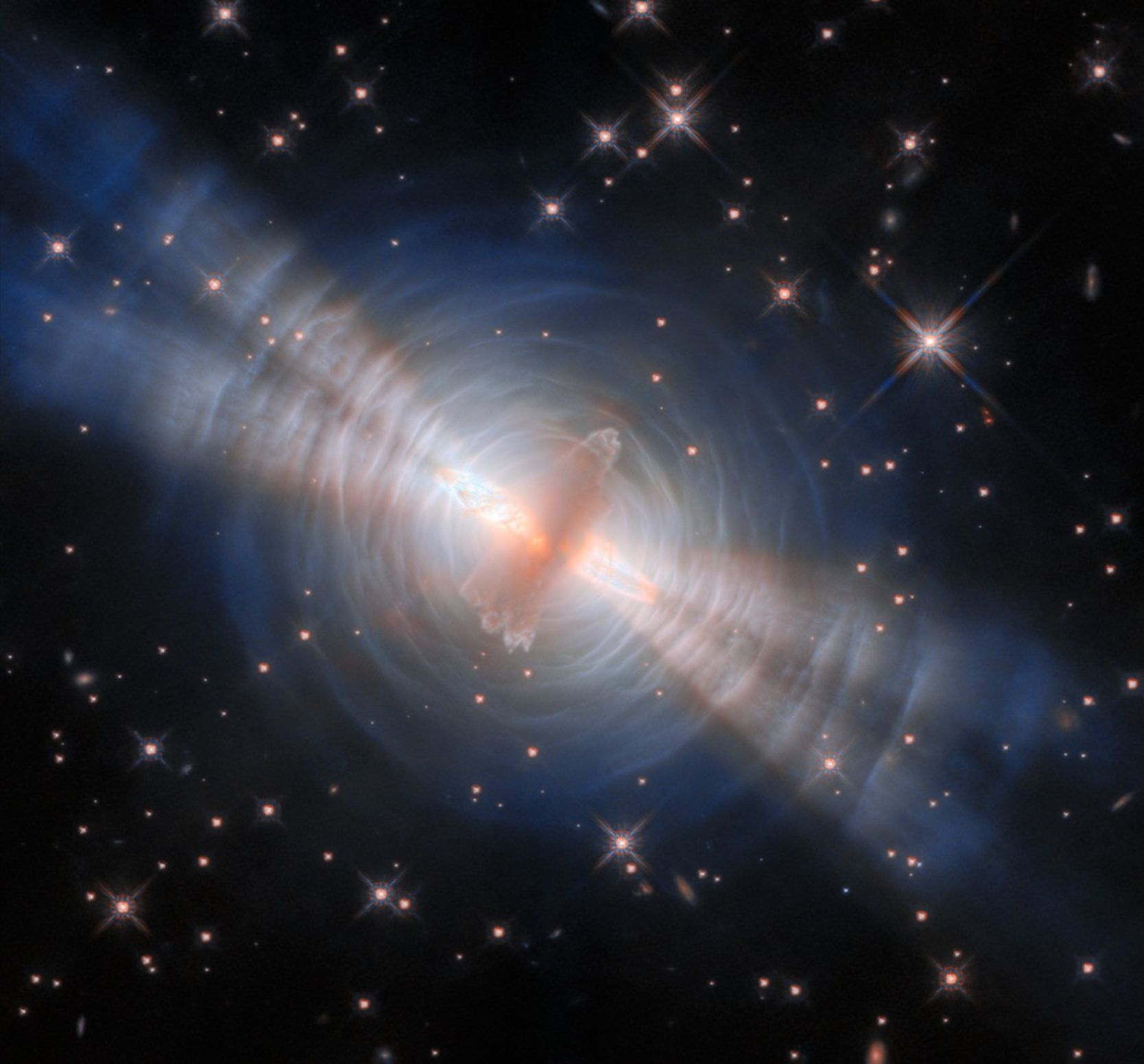
NASA just released this stunning view of the Egg Nebula in Cygnus. Come learn more below.
How Are Massive Gas Giants Born? James Webb Space Telescope provides us some clues!
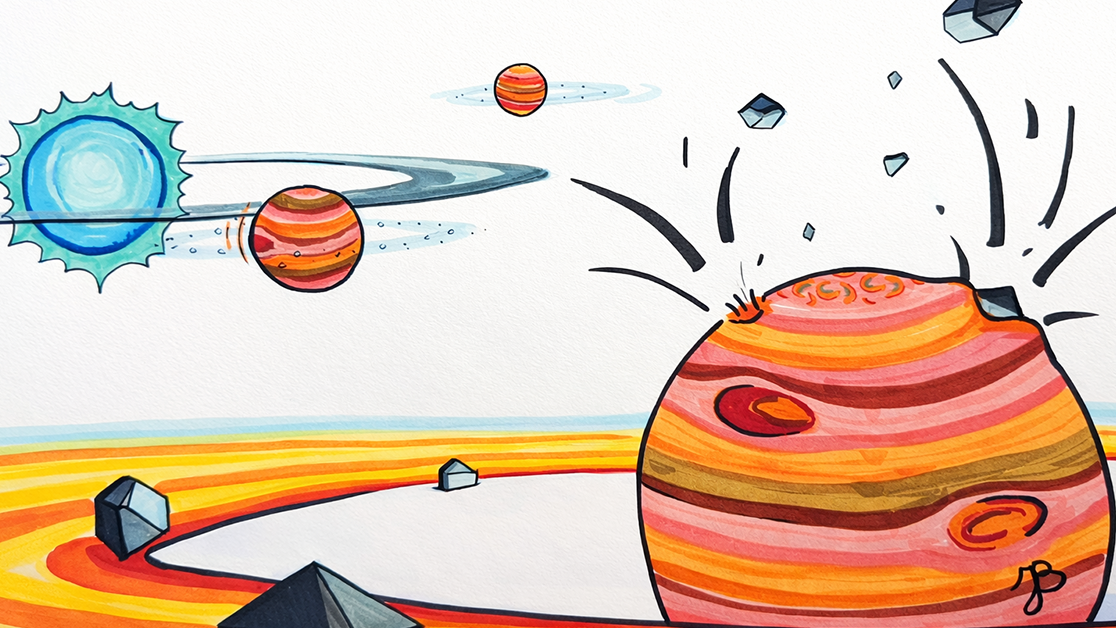
How are gas giants that are 5 to 10 times more massive than Jupiter created? Are they created much like a brown dwarf which are substellar objects that fuse deuterium, rather than hydrogen like stars, earning them the nickname "failed stars," Or do they form a solid core and accrete gas on top of that core like Jupiter did? Come and find out in the video over at EadsyAstronomy LINK.
Astronomer of the Week: Sir Isaac Newton: The Man Who Explained the Clockwork of the Universe

When amateur astronomers look up at the night sky and track the motion of the Moon, planets, or even long-period comets, we’re seeing Newton’s universe in action. Few individuals have shaped astronomy more profoundly than Sir Isaac Newton, whose work finally explained why the heavens move the way they do.
for more head over to EadsyAstromomy for the Text and Links to articles I pulled this from.
2/09/2026
Winter River Rafting Trip in the Celestial River of Eridanus

NGC 1535 Cleopatra's Eye; Planetary Nebula in Eridanus
I've put together a visual observing program for the winter constellation of Eridanus with plenty of good and fun objects to both observe visually or image. I've also included some very hard and challenging objects for those that like challenges, even at the beginner level.
The full program is over at EadsyAstronomy and you can download the PDF or make a copy of the Google Doc if you wish. The observing program like all the content is free. I do offer for contributing members ie Stargazers a more in depth view of the program. Monthly contributions of $3.00 gives you access to the behind the scenes info for this program and other benefits. It shows that you feel the content I am creating is useful and enjoyable and helps offset expenses like gas, equipment (like right now hand warmers) and time. As always the content is free and will remain free. Thanks for looking and I hope you find the program enjoyable!
2/07/2026
Total Lunar Eclipse March 3rd 2026

On March 3rd, 2026 we will be able to experience the only Total Lunar Eclipse here in North America for 2026. The next fully total Lunar Eclipse won't be until New Year's Eve, December 31st, 2028! So plan to get out for this one! More with dates and charts and links over at Eadsy Astronomy!
2/06/2026
Observing Report: October 20th, 2025 Back to Top View


Well, two days after my accident, I was back out with the doctor's permission observing. Here is my video of that. For more, please head over to EadsyAstronomy which has a lot more videos tied to this.
Weekly Newsletter February 8th to 14th, 2026

Image I took of M81 last night
Come on over this week and gather around the virtual telescope. Come see how the moon moves from the wanning gibbous stage and heads toward new moon opening up evenings for deep sky observing and imaging. I recommend a variety of double stars, deep sky objects and lunar features to go and observe or image for this week. For the text of the newsletter and to get a copy to your Google Drive or the PDF head over to EadsyAstronomy LINK.
2/05/2026
Weekly News Roundup February 5th, 2026
Lots of interesting stories out on the Internet released as papers this week!
1. The Loss of the ISS and what it means to us in 2030
2. Some Gas Giants Refuse to be Destroyed When their Host Star becomes a Red Giant, keyword, Some.
3. IC 443 and the Runaway Star That Escaped a Stellar Explosion
Come learn more and for the full article with links head over to Eadsy Astronomy and look for Weekly News Roundup for February 5th ,2026. https://patreon.com/EadsyAstronomy795?utm_medium=unknown&utm_source=join_link&utm_campaign=creatorshare_creator&
2/04/2026
Observing Report: October 18th, 2025: Top View and Don't Be Dumb and Hurt Yourself Jay!
WARNING: If stitches and blood make you not feel well, don't go to the bottom of this post!
Way back in October, I went out to Top View for a quick evening of observing. I had been out the previous night out at Eight Mile Spring Rd with my friends Shane and Jeff. We had an excellent night! Well, I wanted to maximize the sky as the conditions were just terrific so since Shane and Jeff could not make it, I headed out on my own to Utah's West Desert to a site I call Top View. Top View is on Toon Rd. which is off the Pony Express Road and about 2 miles west of the Pony Express Marker on that road.
I made this into one movie but thought it would be better to split them up here so you can just the footage I made on my drive out to Toon Road and Top View. If you're new here, my videos are raw, I don't edit them in this case because I just want you to have a feel for my voice and who I am and my love of the hobby. Please look past mistakes I make.
This is of my drive out on the road leading to Five Mile Pass and my thoughts as I drove.
This video is of my continued drive out on the Pony Express Road. I show the road and that there are others ATVing, Motorbike riding, and it looked like some rocketing going on.
This next video shows my drive on Toon Road after turning off the Pony Express Road. The Top View site is about 1/2 mile south on a ridge. On the drive out someone had tried to block the road with tires. I went around them and later went back and moved them out of the road. The next day my son called the BLM and on our next drive out they had been removed. Please if you use the Public Lands, be respectful and carry out what you bring in, so others can enjoy the land.
Below you can see how beautiful the sky was here. This is the view looking south from Top View. Just spectacular!!!! I was so looking forward to having an outstanding evening.

This video shows the 17.5 inch dobsonian telescope that I named Star Catcher collimated and ready to go. I also show you how (not in the winter months) I use the car windows down to access my equipment.
This video shows my set-up and the table I use to write down my observation descriptions on the back of my sketches and how I decide what objects to go after and where I keep the list I am working off of.
Here is Star Catcher, my 17.5" dobsonian collimated and aligned and ready to go for the evening! The view here is to the south southeast.

Here you can see Star Catcher with my table set up and my step ladder I use when I go up high on my f/4.4 and my parka. It was such a gorgeous night!

Something I don't touch on much but here it is, dinner. Yep, I usually always bring my dinner with me. Sometimes you'll see a nice salad, sometimes like tonight two gluten-free bagels with low sodium turkey and a piece of dairy free cheese. I have Celiac Disease and gluten and I just will never agree. Celiac disease has also made me lactose intolerant and let's just say you don't want to be around me if I consume lactose unless you have several cans of Febreeze with you.
Sunset looking west from the top of the ridge.

Star Catcher my 17.5 inch dobsonian telescope looking west with the Sunset.

Star Catcher again looking south in this view.

Sunset looking west to southwest.

Twilight with Venus and Arcturus in the frame with two faint train lights in the distance. What a GORGEOUS Night!!!!!

Well after sunset fell, I was ready to go. I began observing and notice that the balance was off. I had put on an extra counterweight and had attached it with black zip ties. The counterweight needed to come, and the wire cutters I use on zip ties was in the Ascent below the back cupboard. I thought about getting it and then decided to use my hunting knife since it would be quicker, and I REALLY wanted to get observing on this gorgeous night and not open the Ascent. I wanted to keep my dark seeing adaptation that was matching the night fall.
Just then that little voice inside of me said "No, put the knife away, get the wire cutter, or you'll cut your hand." Well if you know me, I know and most who know me well know if that little voice speaks to me, I need to listen to it.
Did I? Nope. I went with a red light on and cut the first two zip ties. I moved to the third and as I cut the knife slipped and entered into my left hand just below the first knuckle on my left thumb.
Blood instantly started pouring out, literally. I dropped the knife and I had a clean towel and grabbed it and applied pressure to try and stop the bleeding. The blood began to soak into the towel and I had to get a second one I had. I also got my cell phone out and tried calling first my wife, it went to her voicemail. Next I tried my 31-year-old son and that went to voicemail. I needed help, so though Shane had stayed home to spend time with his wife and sons, I called.
Instantly his wife got an emergency first aid kit and Shane was out the door heading my way. I knew at this time of night I had a 45-minute wait. Just then my son called me back, and I told her that I had a major cut on my hand and I need to go to the emergency room and I would need him to come out and load up my scope and drive my car home. I then tried my wife again and got no answer, so I hung up and tried one more time.
This time she answered, and I explained what had happened. By now the blood was stopping as long as I kept pressure up. I had looked, and I had about a 1/8 open cut, and it was deep, I could tell that and it HURT! My wife arranged with my son to drive them both out, and he would with Shane, load my equipment and telescope up and my son would then drive my Ascent home. My wife Lynda would then drive me to the emergency room.
Well Shane showed up, and we applied some of his bandages to the would and I kept pressure up on it. As long as the pressure was kept on it wasn't bleeding. Lynda my wife and my son Nathan showed up. Nathan and Shane started unloading and Lynda took me into her Jaguar F-Pace, and we started the 35-minute drive to the nearest emergency room.
When we got there they weren't that busy, but I did have to wait about 25 minutes for the doctor to come in an examine the wound. During that time I had to remove my bibs and most of my layers of shirts leaving only one on.
The doctor came and examined the would thoroughly. As I took off my bandage the wound began to seep blood again, but nothing like out at Top View. I could move the thumb and only felt some numbness on the side of the thumb. He said I had probably nicked the nerve, and he didn't think I needed a specialist as in time, it would repair itself.
He announced he didn't think it had gone too deep but deep enough to require stitches. He had to finish up with another patient. Furthermore, he informed me and my wife that he'd be back and that the nurse would clean me up first. However first he would give me a couple of injections to numb the wound area. The first hurt a little bit, then the rest were fine. It takes a lot to numb me up so he had to give me five shots to numb the area.
She came in and sure enough, she cleaned me up. The nurse did a fantastic job. The would was thoroughly cleaned. The doctor then returned and stitched me up. I asked restrictions. He told me no swimming for 6 weeks and to be seen in 3 weeks. I asked if I could go observing again, and he said yes, in a couple of days but make sure you wear a bandage over it when you do that. Also, he gave me shower guidelines to keep the wound clean and ointment to put on it.
Here are two shots after the doctor stitched me up.


It wasn't a fun cut, and it put my weight loss on hold really through December. I returned to swimming in mid-December and that has helped as I love that hour every day I swim which is six days a week. I've lost ten of the 20 lbs I put on from my vacation in September and then after this incident.
I just took this picture of the scar area today. I had pain in the area for most of December and the area above the wound and on the left side of my thumb were really numb. That numbness is fading, and I have to actually rub the area to feel it. My doctor predicts in about four to six more months I'll be totally healed. Nerves just take time to regrow!

What did I learn from this incident? Well, it is the first major accident I have had in 25 plus years of observing here in Utah. I learned to make sure to let people know where I am going and for that purpose I have share my location on with my wife, my son and Shane. That way if I am alone and observing alone I can reach out, and they can either come and assist or direct emergency response where to go.
Second, I know when I hear that little voice in me speak to me, I must heed it. I know better. Also, I need to if I need to make a field repair make sure I have the right equipment to make the repair or adjust until I can make the repair I need. I need to use the right tool for the right task also.
Anyway, sometimes observing is a new adventure in ways we never expect. Here's hoping you learn from my experience. I was back out there two days later and tomorrow I'll post of my observing session on October 20th, 2025. See, I could go, and so I went more because I wasn't going to let my stupidity stop me, and I was determined to overcome the wound without aggravating it. I accomplished that as you'll see in the next post.
Clear skies to you and remember to look and be amazed.
Update on AR4366 and X4.2 Solar Flare release at 12:13 UT time earlier today

2/03/2026
The Guest Star of 1604: Kepler's Deep Dive
Well, since I discussed Kepler as the Astronomer of the Week, I just had to take a deeper dive into SN1604! Yep, Supernova are my favorites along with Planetary Nebula!

Head over to EadsyAstronomy for the video and text. LINK.

2/02/2026


Artist rendition of aftermath of a Kilonova
After posting here, on EadsyAstronomy and on YouTube for EadsyAstronomy, I had a comment asking about Kilonova. So I made this entry up in response to the comment asking for more information on Kilonova.
A Kilonova to get this out of the way, is a cosmic event, that is rare and is the result of the merger of two neutron stars that are in orbit around each other or the merger of a neutron star with a black hole.
There is a lot more of course on this at EadsyAstronomy LINK.
Sunspot AR4366 is REALLY Flaring Up!!!

Taken from my SeeStar S50 this afernoon showing AR4366 and its complexity and several other sunspots.

Just in: AR4366 just let off a X8.1 Flare at 6:57 pm EST!!!!
AR4366 appeared on the Earth facing Solar limb on 1/31/26. In two days it has risen to be very complex and has released over 23 M Class and now 5 XClass Flares and several CME's. The CME's should only cause a glancing blow to Earth. This region is super active and look forward to more events this week. I have a video discussing it and text that has even more info in it now over on my Website. For the video and more head over to EadsyAstronomy at this LINK.
Subscribe to:
Posts (Atom)