Pages

2/11/2026

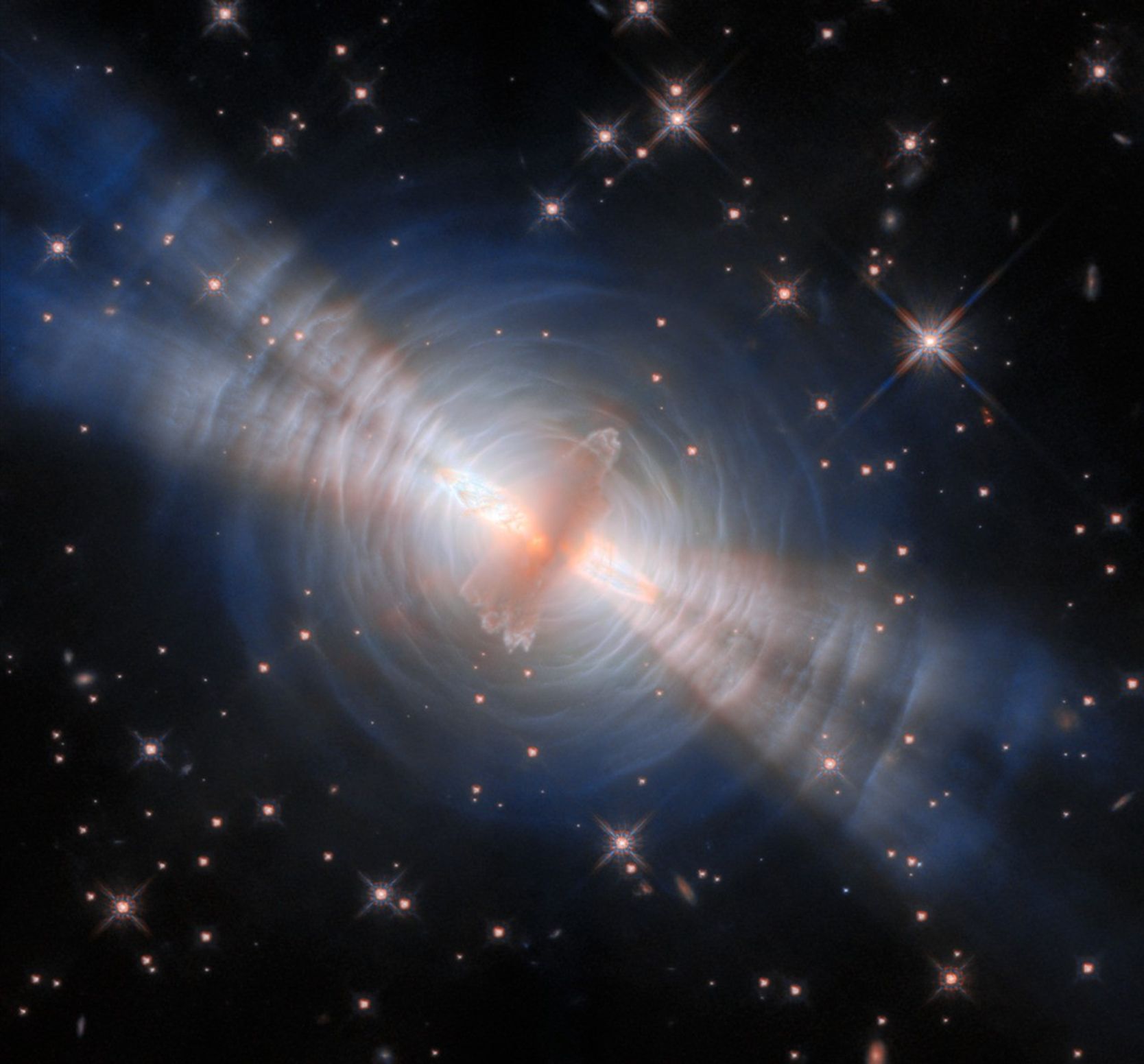
A Celestial Swan Song: Hubble Space Telescope View of a Dying Star

 In the image center, an opaque oval cloud of gray gas aligned from 1 o’clock to 7 o’clock hides a star. Two strong beams of light from the star emerge from large holes in both sides of the cloud, forming narrow cones extending toward 10 o’clock and 4 o’clock. The central cloud is surrounded by concentric, wispy shells of gas illuminated by the star’s light. The shells reflect extra light where they’re hit by the twin beams. A crowd of smaller stars with cross-shaped spikes over them surrounds the nebula on a black background.

NASA just released this stunning view of the Egg Nebula in Cygnus. Come learn more below. 
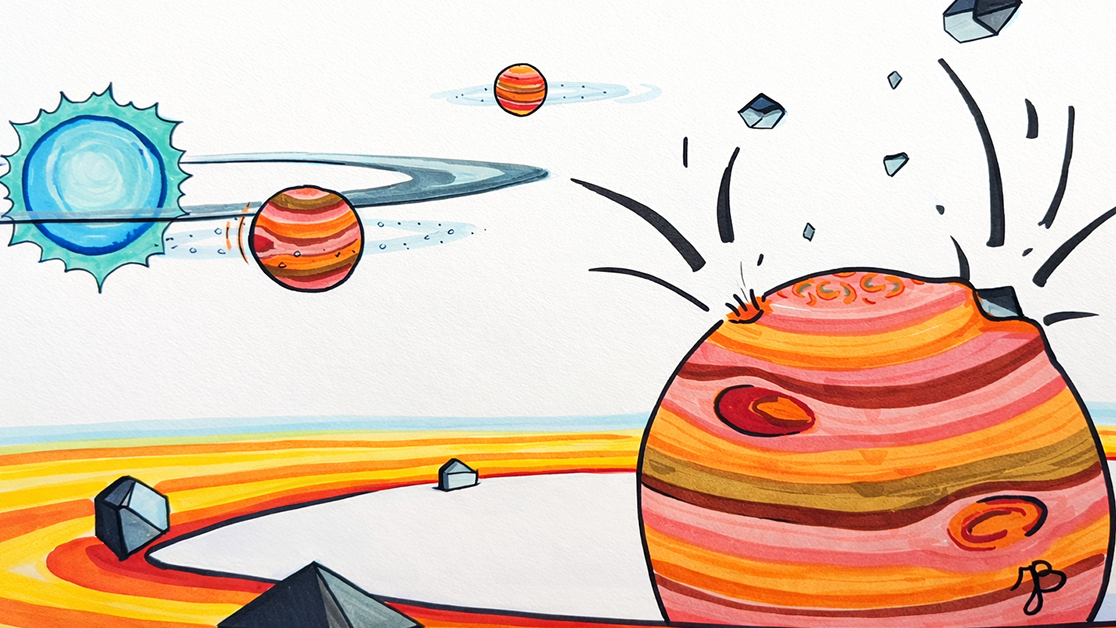


How Are Massive Gas Giants Born? James Webb Space Telescope provides us some clues!

 A drawing of a planet that looks like Jupiter surrounded by rocky objects. It looks like rocks are impacting the planet from above. In the distance, there is a drawing of a blue sun-like figure with another Jupiter-looking planet around it.

How are gas giants that are 5 to 10 times more massive than Jupiter created? Are they created much like a brown dwarf which are substellar objects that fuse deuterium, rather than hydrogen like stars, earning them the nickname "failed stars," Or do they form a solid core and accrete gas on top of that core like Jupiter did? Come and find out in the video over at EadsyAstronomy LINK


Astronomer of the Week: Sir Isaac Newton: The Man Who Explained the Clockwork of the Universe


When amateur astronomers look up at the night sky and track the motion of the Moon, planets, or even long-period comets, we’re seeing Newton’s universe in action. Few individuals have shaped astronomy more profoundly than Sir Isaac Newton, whose work finally explained why the heavens move the way they do.


for more head over to EadsyAstromomy for the Text and Links to articles I pulled this from.