Well, the end of October brought several observing opportunities for me and a few friends. Some were good outings, some were not so good. So I'll try to recap them now. On October 19th, 2011, my friend Mat and I went out and tried a location I have used in the past near Lookout Pass. Lookout Pass is up at about 5600 feet, higher than the Pit n Pole Site I and others frequently use. Here is a map to its location:

You drive past Pit n Pole to the Faust Station (past the 3 railroad tracks and down the road to the highway). You turn left as if your heading to Vernon and then wait for the marker for the Pony Express Road which is a gravel road. Turn right there and then follow the map out. When I was last at this site, there were no ruts in the road off the Pony Express Road but now someone last winter, had taken a four wheel drive and made some pretty big ruts so be careful in a car out there. My Pathfinder made it out there just fine as did Mat's minivan. You have a nice are to set up in here, with Cedar trees behind you and you can use the Cedar Trees to block any stray light from Vernon. These lights are less impact to one than the lights from the Weapon Depot, but Vernon is to the south-east to where the weapons depot is to the norht-west of Pit n Pole.
The atmosphere this night was not very good for viewing, and horrible for seeing galaxies. I failed trying to find NGC 7042 twice tonight because of the conditions. I know I was in the right area as the finder chart matched, but just couldn't make it out. Later I would learn why. I did bag the following item:
Date: 10/19/2011 Time: 09:30p.m. MDT; Location: Lookout Pass, Rush Valley; Seeing: Antoniadi IV to V; Conditions: Mild, high thin clouds and cloud mixture.
Object: NGC 7156 Spiral Galaxy in Pegasus. Mag. 10.3; RA 21h 59m 7s Dec. +3 degrees 50m 8 s. Instrument: XX14i Eyepiece: 10mm Pentax XW
Notes: This is a very faint, roundish galaxy, a Herschel 400 II object. The strong winds aloft make it hard to see. Basically a smudge with a 11th to 12th magnitude stars next to it. Maybe a hint of brightness near the core, some mottling evident.
I did spend some time with Messier 15 and that led to an attempt to sketch it but the clouds came in and we packed up. I also tried for several other objects and I viewed some eye candy in Cygnus but there really wasn't much to report.
My friend Jorge wanted to try on Sunday night so I gave it a shot, anxious to get some work on some lists done. This night I went to Pit n Pole, October 20th, and conditions were not that much better. I got in some eye candy in Sagitarrius and then noticed that I had a H-400 open cluster to get done that I had missed so I went after that and got it.
Date: 10/23/2011 Time: 08:35p.m. MDT / 10/24/2011 02:35 UT; Location: Pit n Pole, Rush Valley, Utah. Seeing: Antoniadi III; Conditions: Mild, lots of vapor and cirrus clouds. Object: NGC 752 open cluster in Andromeda. Mag. 5.7; Size: 75'; Instrument: XX14i; Eyepiece: 27mm Panoptic.
Notes: Very large open cluster and it is across from 58 Andromeda. Two stars are next to it that are very close and bright in the finder. This is a very rich open cluster with well over 100 stars in evident, more wanting to peep out. Very long and loose chains on the outer portion of the cluster leading to smaller chains with less distance between the stars as you work your way in to the center of the cluster. A very nice open cluster, one I'll come back and visit.
I sketched this one so here is the sketch.

That was about all I got that night, before packing it up and heading home. Weather had nailed me I guess for my visit south. However, then came the night of October 22, 2011. On October 22, 2011, the weather had been iffy during the day, but I spent a half an hour or so really looking over the weather charts and satellite data. I find with Clear Sky Clock if I click on an hour when I want to observe at a site and then advance for 6 hours, I can then use my back and forward buttons on my browser to get an idea of what the forecast is from them. Next, I combine that with what I see in Skippy Astronomer Forecast and those two then go with what I get from my local National Weather Service. Everything this day said go, so I went. I took a new friend this night, Josh, who is working on building his own scope so I took my XT10 to let him use it that evening. I had the 14 reflector with me and off we went. My friends George, Dave Rankin (who I called Tyler for Tyler Allred at one point), Jorge and Ian showed up to either observe or image out there. Well, Jorge images in the dark with his camera and Ian, Josh and I visually observed.
I gave Josh some tips on how to use the Pocket Sky Atlas and a Planisphere and the XT10 with the Telrad, finder scope and eyepiece to nail objects. He did quite well considering I didn't bring a laser to help him. So before I go farther I'll share some images of the site in b/w. This is where we set up, just by something we call the bern which is a raised wall. On the other side in the spring there is a drinking hole/spring for animals and cows to drink from. By late spring and summer and fall the cows stay away from here.

Another view of the set up area.

The XX14i and the XT10 set up, both collimated and both cooling their mirrors (that makes me think of a song by the group Boston).

No promise that the movie will show up here or will work. I often have problems with them on this blog but I'll give it a try. Oh, yes, I was getting giddy as conditions continued to improve as twilight came up on us. I was excited to observe if you can't tell.
I had a very productive night this night viewing over 30 objects (that is high for me) and getting some sketch time in. So, here we go with observations and sketches, then I'll mention what else I did. It did get down to around 28 degrees F that night.
Object: NGC 7448 Spiral Galaxy in Andromeda. Date: 10/22/11; Time: 08:35p.m. MDT; Location: Lakeside, UT; Antoniadi II; Conditions: Clear, Cold. RA 23 h 00m 3.7s Dec. +15 degrees 58m 5.0s; Mag. 11.5; Size: 2.7'x1.2'; Instrument: XX14i and 10mm Pentax XW.
Notes: Bright core with elongated halo around the core. The galaxy is elongated NW-SE.

I now began working both individual galaxy and galaxy groups in Pegasus. The area and the 20" had whetted my appetite enough that I wanted to see what the 14 can do. The other reason is I want to compare some of these objects when the new mirror comes for Carl Zambuto. Anyway, I ended up on the next object which are two wonderful elliptical galaxies that are surrounded by other galaxies in the area. I need to do a wide field sketch of this region.
Object: NGC 7619 & NGC 7626 Elliptical Galaxies in Pegasus. Date: 10/22/2011; Time: 11:01p.m. MDT; Location: Lakeside, UT; Seeing Antoniadi I; Conditions: Clear and COLD; RA: 22h 20m 4.5 s; Dec. +08 degrees 12m 21 s; Mag. 11.3; Size: 2.5'x2.3'; Instrument: XX14i; Eyepiece: 10mm Pentax XW;
Notes:
Bright elongated core wit ha very stellar nucleus. Halo is diffused around the core and is also elongated. Sits NE-SW and has a very typical elliptical shape to it. This is the brightest member of the Pegasus I galaxy cluster. NGC 7617 was visible but I did not include it in this sketch
NGC 7626 Elliptical Galaxy in Pegasus; Date: 10/22/11; Time: 11:16p.m. MDT; Location: Lakeside, UT; Seeing: Antoniadi I; Conditions: Clear, COLD; Mag. 11.5; Size: 2.6'x2.3; RA 23h 20m 42.6m; Dec: +08 degrees 13m 01s; Instrument: XX14i; Eyepiece: 10mm Pentax XW;
Notes:
Faint stellar core and the core is evident. Core is surrounded by an elongated halo. This elliptical is a hair smaller than NGC 7626 in the eyepiece. No other structure is visible. This is the second brightest member of the Pegasus I galaxy cluster. View NGC 7631 and I need to return to sketch that one also. Basically NGC 7631 is a very tilted spiral galaxy, with a hint of brightness near the core. No nucleus is evident.

With conditions being this good, when I got done with the Pegasus I cluster I went hunting for that little sneak that had eluded me, NGC 7042 and I nailed it.
Object: NGC 7042 Spiral Galaxy in Pegasus; Date: 10/22/2011; Time: 11:40p.m. MDT; Location: Lakeside, Utah; Seeing: Antoniadi I; Conditions: Clear and COLD; Mag. 12.2; Size: 2.0' x 1.8'; RA 21h 13m 45.9s; Dec +13 degrees 24m 28s; Instrument: XX14i; Eyepiece: 10mm Pentax XW;
Notes:
I have mentioned I failed on this object on several times due to conditions and tonight I know why. This galaxy took the fantastic seeing of this night in order to bag it. It is extremely faint, roundish object with no structure evident. Well, after looking more, perhaps a hint of structure? I did find it interesting that this object is in the NGC/IC Database online but not in the Fall/Winter Night Sky Observer's Guide.

I had the itch to go after Pease 1 tonight in M15 but I left my finder charts at home so I decided to do what I had intended out at Lookout Pass, which was to sketch Messier 15. So here it is, much larger than it appears but I took the magnification up really high on this one. Messier 13 is fabulous, but I have to admit that Messier 15 is my favorite globular.

Object: NGC 7814 Sprial Galaxy in Pegasus; Date: 10/23/11; Time: 01:07a.m. MDT; Location: Lakeside UT; Seeing: Antoniadi I; Conditions: Clear and Cold; Mag: 10.6; Size: 6.0 x 2.5; Instrument: XX14i; Eyepiece: 10mm Pentax XW;
Notes:
This is a bright, large galaxy with a bright core that is broad and well condensed. It has a stellar nucleus that is faint but yet sticks out. The core's brightness seems to extend out but I see no hint of the dust lane that exists in photographs of this object. A fun galaxy. I don't like how I ended up cluttering up this sketch.

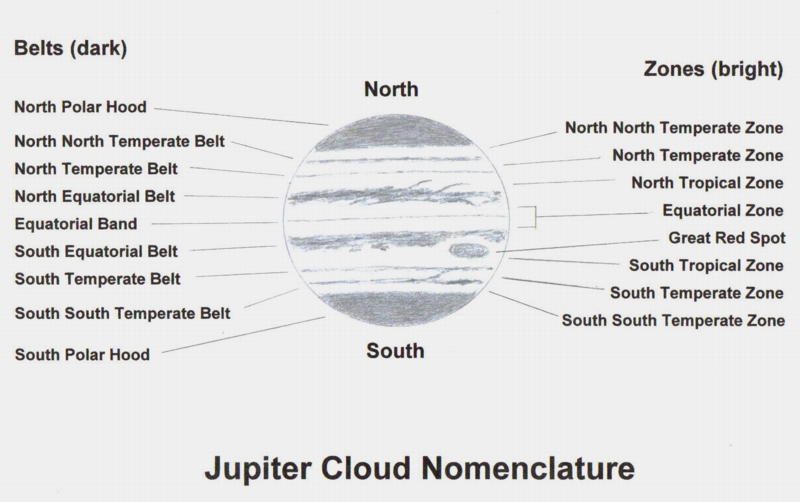
We actually had a lot of fun that night and I wished I had sketched Jupiter that night. I don't know what it is but Jupiter, the XX14i and Lakeside just go with fantastic seeing. The GRS was marvelous, the structures on the clouds were evident and nicely so, and the image was crisp and clear. I spent time in Auriga and showed of Messier 36, 37 and 38, also NGC 1931, and Messier 35. I hadn't viewed any of these items save NGC 1931 for two years now. NGC 2158 stood out this night so evidently with the Panoptic 27mm. It looked like this image and I wished I had sketched this one. Just put NGC 2158 in the lower left corner.

The one thing that I will remember for this session, for a very long time, is the excitement that Josh had when I showed him Messier 42, the Orion Nebula for the very first time in the XX14i. His wow, excitement and thrill was something I wished I had recorded because we only view M42 for the first time once. His excitement and thrill of seeing it made me excited. The filaments were there as threads, and the actual nebula with the trapezium looked 3D. It was an incredible view and one I should have taken the time to capture but it was late, like 4:00a.m. and I had to tear down the XX14i, the XT10 and load up. It made me think back to my first time and the first time I shared the view with my son in our backyard. I really enjoy those moments with my kids, when we look through the scope in the backyard and share that experience together. M42 will always be Nathan's Nebula to me because of that. I will always think of my son when I gaze on M42 and I think that is what Josh reminded me of. The fact that we observe, we sketch, we take images, and we learn of the science behind these items is great. Yet in the end, it is a human being who is making connections with the universe, the natural world, with themselves and hopefully with others that makes this such a magical hobby. At least for me.
So on October 29th, 2011 I got to go out one more time before the moon and the weather changed. This time a group of us went to Pit n Pole and the group included Jorge, Mat, Josh, Mark and myself. Mark is a teacher, who built his own dob and did a beautiful job with it (I posted a picture earlier this summer of it, it has the wooden truss poles). He teachers wood shop and has a virtual shop at his house. He also brought a two burner heater and it is a good thing as it got cold, down to 19 degrees F that night. I also had my new little heater and I put it under the table and it kept me nice and warm. More on that in a coming post later this week.
Object: Pease 1 in Messier 15 a globular cluster in Pegasus; October 29th, 2011; Time: 08:25p.m. -10:15p.m. MDT; Location: Pit n Pole, Tooele Co. Utah; Seeing: Antoniadi II; Conditions: Clear and cold; Mag. 15.5; RA 21h 30m 02s; Dec. +12 degrees 10m 2 seconds; Instrument: XX14i with 7mmPentax and 2x Powermate; Filter: OIII
I was really selfish to begin the night. The seeing was an Antoniadi II to I up top and I had brought my Pease I charts so I went for Messier 15 first thing. Once there I brought magnification to the glob and found the trapezium of stars as in the finder chart from Freeman's site. I then followed the star hop using the 7mm Pentax XW and a Powermate 2X. From the star hops I was able to get in the general area after several attempts and then using my OIII filter, I was able to blink the planetary to confirm I had found it. Now that sounds a lot easier than it was and it takes a lot of time and effort and redoing hops several times to get there. It was faint and it took me adjusting to what the OIII filter does to the globular to really be able to view it. The PN was at about 6 o'clock of the core, just off of it actually (depending on one held ones head at the eyepiece). Mat came over and confirmed the finding and the placement as did Jorge. Now I just need to get the one in Messier 22 next summer!
Processing a sketch. Will post it when I get the time to process it.
Object: NGC 7177 Spiral Galaxy in Pegasus; Date: 10/29/11; Time: 11:26p.m. MDT; Location: Pit n Pole, Tooele Co. Utah; Seeing: Antoniadi II; Conditions: Clear and cold; Mag. 11.4; Size: 3.1'x2.0'; RA 22h 00 m 41.2 s; Dec: +17 degrees 44 m 16 s; Instrument: XX14i; Eyepiece: 10mm Pentax XW;
Notes:
A face on spiral galaxy that is small in size but very bright. Sites next to a 13th to 14th magnitude star. Bright inner stellar core that is surrounded by a bright halo with diffusion around the bright inner core. I actually have these recorded and a funny item here. There were a couple of guys in a pickup out shooting with a semi-automatic gun. They had driven by our area and had seen us and left it alone but it makes for some interesting recording! Oh, they were spot lighting and I believe hunting rabbits or other animals or just shooting things up.

Object: IC 351 Planetary Nebula in Perseus; Date: 10/29/2011; Time: 10:55p.m. MDT; Location: Pit n Pole, Tooele Co. Utah; Seeing: Antoniadi II; Conditions: Clear and Cold: RA: 03h 47m 33.14s; Dec. +35 degrees 02m 48.5s; Apparent Magnitude: 12; Instrument: XX14i; Eyepiece 14mm, 10mm 7mm Pentax XW; Filter: Tried Ultrablock NB but OIII worked better.
Notes:
I had a hard time finding this PN for some reason this night. Roundish and faint.

Object(s) NGC 7339 & NGC 7332, Spiral Galaxies in Pegasus (edge on); Date: 10/30/2011; Time: 12:15a.m. MDT; Location: Pit n Pole, Tooele Co. Utah; Seeing: Antoniadi II; Conditions: Clear and Cold; NGC 7339 mag. 12.5; Size: 3.0'x0.7'; RA 22h 37m 47.5s; Dec. +23 degrees 47m 11s; NGC 7332: Mag. 11.2; Size 4.1'x1.1'; RA 22h 37m 24.5s; Dec +23 degrees 47m 54s; Instrument: XX14i; Eyepiece: 10mm Pentax XW;
Notes:
NGC 7339: Edge on galaxy that is below NGC 7332, and in a way the tip of NGC 7339 points to NGC 7332. Slight concentration of light in the middle, a hint of mottling was evident. This galaxy shows no tips like NGC 7332 and is much more diffused overall. Highly recommend you check this pair out.
NGC 7332: An outstanding edge on galaxy that has an elongated bright core with a stellar nucleus in the center. Tapered ends were evident at 165x. This is a must see fall galaxy if you haven't had the opportunity and is relatively easy to find.
I won't include here my Abell galaxies hunt, as I think I'll make a new page up for that. I want to keep this mainly for the Herschel 400 and 400 II that is probably going to grow into the the Herschel 2500. So I hope you have good weather, I'm not. It snowed here twice in the last 4 days. A couple of inches and it melts by afternoon but still. No lunar or double star viewing for me. I'm off to bed now, and hope everyone stays healthy and keeps looking upward.